Gym floor mats are core facilities for ensuring safety and enhancing the athletic experience. Their usage needs to be deeply adapted to the specific scenarios. The following differentiated mat usage plans are designed for three scenarios: sports clubs, hotels, and office centers.
Sports Clubs: Professional Competition and High-Frequency Use
Different sports require extremely high levels of surface elasticity, wear resistance, and slip resistance. When choosing a mat material, high-density PVC should be preferred. Its surface is specially textured, maintaining a stable coefficient of friction between 0.6 and 0.8, effectively preventing athletes from slipping during sudden stops and changes of direction. Mats should be 8-10mm thick, with a cushioning foam layer added to the bottom layer to reduce impact by over 40%, minimizing the risk of joint injuries.
Regarding functional zoning, the core competitive area of the venue should be covered with a seamless, single-piece mat. Mortise and tenon joints are used to ensure smooth, free-standing joints, preventing tripping during exercise. The surrounding warm-up area can be equipped with modular 30cm x 30cm mats, allowing for flexible adjustment based on training needs. Due to the high perspiration rates of athletes, the mats must be stain-resistant and antibacterial. The surface is treated with an antimicrobial agent to inhibit the growth of common bacteria such as E. coli and Staphylococcus aureus. Daily cleaning can be achieved with a high-pressure water jet and a neutral detergent, with deep disinfection performed weekly.
Hotel Gymnasium: Quality Experience and Diverse Scenarios
Hotel gyms cater to both guests and members, and must balance safety with aesthetics. Floor mat selection should prioritize quietness, shock absorption, and visual integration. Natural rubber mats are recommended, as they offer a moderate elasticity and keep noise levels below 30 decibels, minimizing disruption to guest rest. The mats can be painted in neutral tones such as light gray and off-white, with accents in the hotel's branding to enhance the overall quality of the space. In terms of functional layout, strength training areas require 6-8mm thick cushioning mats to dissipate the impact of equipment landing and protect the floor structure. Aerobic equipment areas can use modular mats, with individual mats measuring 1m x 1m, for easy replacement and maintenance. Yoga and Pilates areas should feature high-density sponge mats with a thickness of at least 10mm and a non-slip suede surface for enhanced barefoot comfort. Hotel gym usage fluctuates with occupancy, so mats must be easy to clean. Vacuum dust daily and wax them monthly to extend their lifespan.
Office Building Central Gymnasium: Efficient Utilization and Convenient Maintenance
Office building gyms primarily serve nearby office workers, whose usage is concentrated during lunch breaks and after get off work. They need to accommodate the need for quick switching between exercise modes. Mat design should adhere to modularity and multifunctionality, using standard 50cm x 50cm modular mats. Functional areas should be distinguished by color: dark blue for strength training, red for aerobics, and green for stretching, making it easy for users to quickly identify the venue's function. In terms of material selection, highly resilient polypropylene mats are preferred for their light weight and high wear resistance. Each mat weighs only 0.8kg, making it easy for staff to quickly replace damaged modules. The mat's bottom features a grid-like anti-slip design, ensuring a stable grip even in wet conditions. Due to limited office space, the mats needed to be easily stored and stackable when not in use, saving space. For daily maintenance, an automatic floor scrubber cleans the mats daily. The mats are treated with an anti-fouling coating, allowing for easy wiping away of stains like coffee and sweat, ensuring they remain clean and beautiful despite frequent use.
The key to optimizing gym mat usage in different scenarios is to maximize the value of the space through precise design of material adaptation, functional zoning, and maintenance plans. Whether for professional competition, quality experience, or efficient use, mats should be a core component in enhancing sports safety and enjoyment.
 Top 6 Characteristics and Application Scenarios of EPDM Rubber Granules
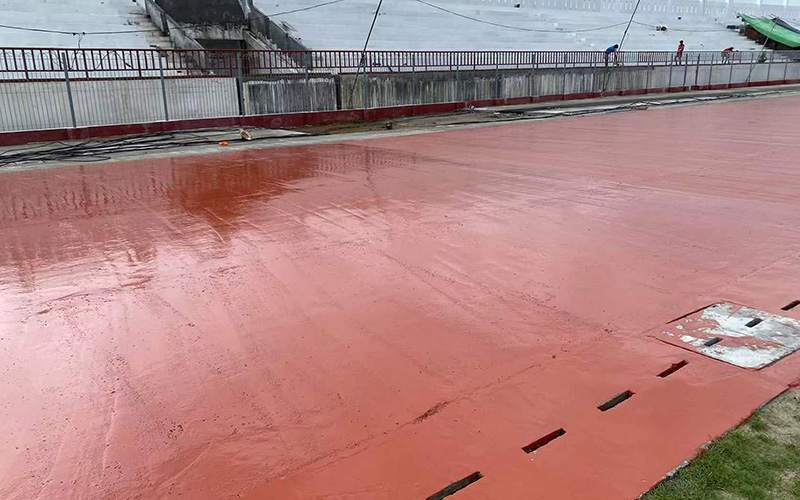 Professional Running Track Construction Guide
 What Attracts Investors Most About Building Padel Courts
 How to Install Artificial Turf for Padel Courts