Clip-on rubber interlocking floor mats have become a popular choice for gym flooring due to their advantages such as glue-free installation, easy assembly and disassembly, shock absorption, slip resistance, and high wear resistance. Compared to traditional adhesive floor mats, clip-on mats do not rely on glue for fixing, which not only reduces construction difficulty and environmental risks, but also allows for flexible layout adjustments to suit the needs of the venue. Professional installation methods can maximize the performance of the floor mats and extend their service life.
Pre-installation Preparation
Preparatory work before installation directly affects the final installation effect and requires consideration of three core aspects: site conditions, material compatibility, and complete tools.
1. Site Survey and Treatment
Base Surface Inspection: Clip-on rubber mats are suitable for cement, self-leveling, and tile floors. The surface flatness error must be ≤2mm/2m. The surface must be dry, clean, and free of loose material, with a moisture content below 4% to prevent deformation due to moisture. If there are cracks in the surface, they must be filled with epoxy resin mortar. If there are oil stains or dust, they must be thoroughly cleaned with a high-pressure water gun and a special cleaning agent, and allowed to dry before proceeding to the next step.
Size Measurement and Planning: Accurately measure the length and width of each functional area of the gym (strength training area, cardio area, group exercise room). Calculate the required number of mats based on the single-mat specifications, allowing an additional 3%-5% for wastage. At the same time, plan the direction of the mat splicing to avoid the seams being directly opposite the landing point of heavy equipment, and reduce local pressure concentration; it is recommended to choose a 15-20mm thick mat for the strength zone and an 8-12mm thick mat for the aerobic zone to improve the shock absorption and protection effect.
2. Materials Preparation
Clip-on rubber interlocking mats, measuring tape, utility knife, rubber mallet
3. Staffing
For large-scale installations in commercial gyms: It is recommended to have a construction team of 2-3 people, with each person responsible for measuring, cutting, splicing, and finishing, for higher efficiency.
For DIY installations in home fitness corners: One person can complete the installation independently, as long as the steps are strictly followed.
Installation Tips
• Temperature Control: The installation environment temperature should be maintained between 15-25℃. Low temperatures will cause the rubber mat to harden and the clips to become difficult to engage, while high temperatures will cause the mat to soften and deform.
• Clip Repair Tips: If the clips are accidentally damaged during installation, a special clip repair kit can be used to embed them, or strong rubber adhesive can be used to bond them together. This will not affect the overall use.
Four advantages of rubber floor mats
Choosing high-quality rubber floor mats can not only enhance the sports experience, but also reduce maintenance costs. The following are the main advantages of rubber floor mats:
1. Easy to clean and maintain
Daily cleaning is very simple. Just add a small amount of multi-purpose detergent to clean water and gently scrub with a mop or soft brush to easily remove sweat stains and dirt, and restore the floor mat to its original state.
2. Healthy and environmentally friendly materials
The floor mats we provide are composed of natural rubber, synthetic rubber and high molecular polymers. No harmful impurities are added. They meet international environmental standards and protect the health of athletes.
3. Excellent anti-slip and wear-resistant properties
The surface of the rubber floor mat has excellent anti-slip properties, and it can stand steadily even with sweat during exercise. At the same time, the extremely high wear resistance can keep the surface intact even under the long-term rolling of heavy fitness equipment.
4. Ultra-long service life
Under normal use and maintenance conditions, the life of rubber floor mats can generally reach about 8 years. If regularly maintained, some customers report that the service life can reach 10 years, which is extremely cost-effective.
Common Mistakes
1. Laying the mat directly on an uncleaned surface
If there is debris under the mat, laying it directly will cause local bulges and loose clips. The surface should be thoroughly cleaned before installation, and fine dust should be removed with a vacuum cleaner.
2. Proceeding to the next step before the clips are fully engaged
If the clips are not securely installed, the mat will shift and warp during use. Therefore, each mat should be tapped firmly with a rubber mallet and checked with a roller.
3. Ignoring expansion joints
The mat will deform due to pressure changes caused by temperature variations. A 2mm expansion joint should be reserved at the corners, and a 5mm expansion joint should be reserved every 10 square meters when laying large areas;
4. Cutting with ordinary tools
Cutting with ordinary tools will cause the edges of the mat to crack and become rough. Use a special rubber mat cutting knife, and place a wooden board underneath to ensure a smooth cut.
Daily Maintenance Tips
Maintaining snap-on rubber mats is simpler, eliminating concerns about adhesive peeling. Here are the specific methods:
• Cleaning: For daily cleaning, use a neutral detergent and mop. For stubborn stains, gently brush with a soft brush. Avoid using strong acid or alkali cleaners to prevent corrosion of the mat surface.
• Maintenance: Check the tightness of the snaps monthly. If loose, tap them firmly with a rubber mallet. Apply a special rubber mat conditioner quarterly to enhance surface wear resistance and slip resistance.
• Repair: If a section of the mat is damaged, simply remove the damaged section and replace it with a new mat. This avoids extensive rework, reducing maintenance costs.
Summary
The professional installation and reasonable use of gym floor mats are important factors to ensure the safety and comfort of the gym. Following the above guidelines and choosing high-quality rubber floor mats can not only greatly improve the image of the venue, but also create a better sports environment for customers.
 Top 6 Characteristics and Application Scenarios of EPDM Rubber Granules
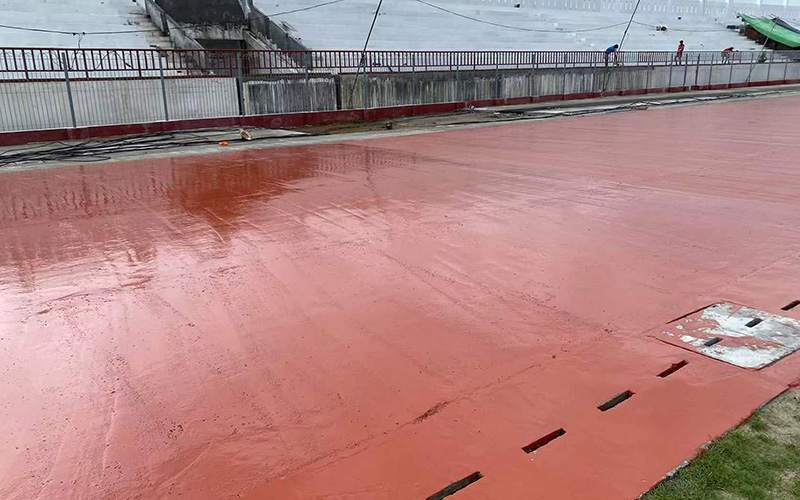 Professional Running Track Construction Guide
 What Attracts Investors Most About Building Padel Courts
 How to Install Artificial Turf for Padel Courts